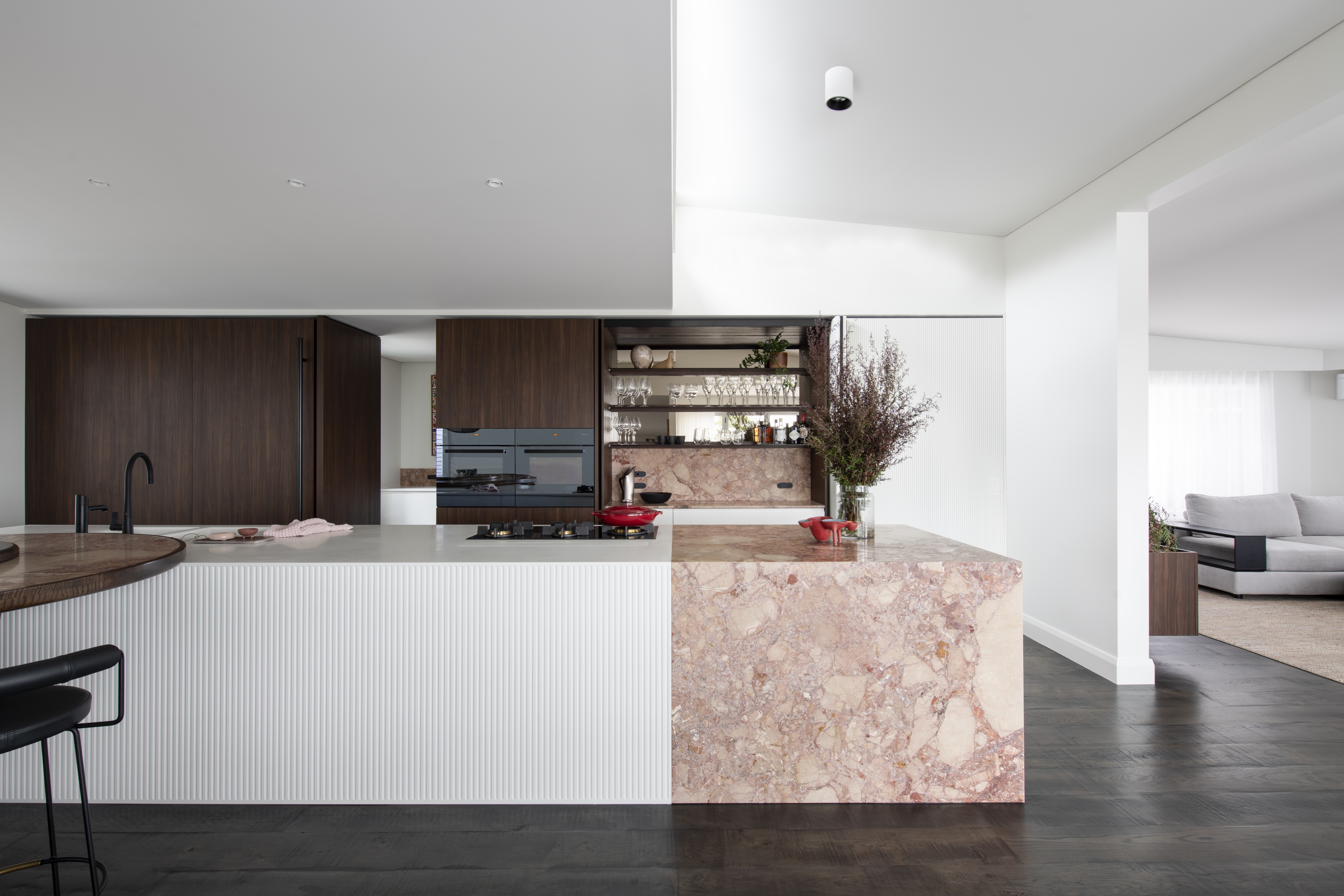
Now You See It, Now You Don’t
August 14, 2026
There was a time when rooms had singular roles. Kitchens were for cooking, studies for work, spare rooms for guests. Today, the home is expected to do far more.
Children are staying at home longer, adult children return, grandparents visit for extended periods and work has moved firmly into the domestic realm. A dining room can become a meeting room by 10am, a bedroom can double as a study, and the kitchen is expected to host breakfast, homework, entertaining and everything in between.
That shift has changed the way we think about interiors. It is no longer simply about where things go, but when they need to be seen.
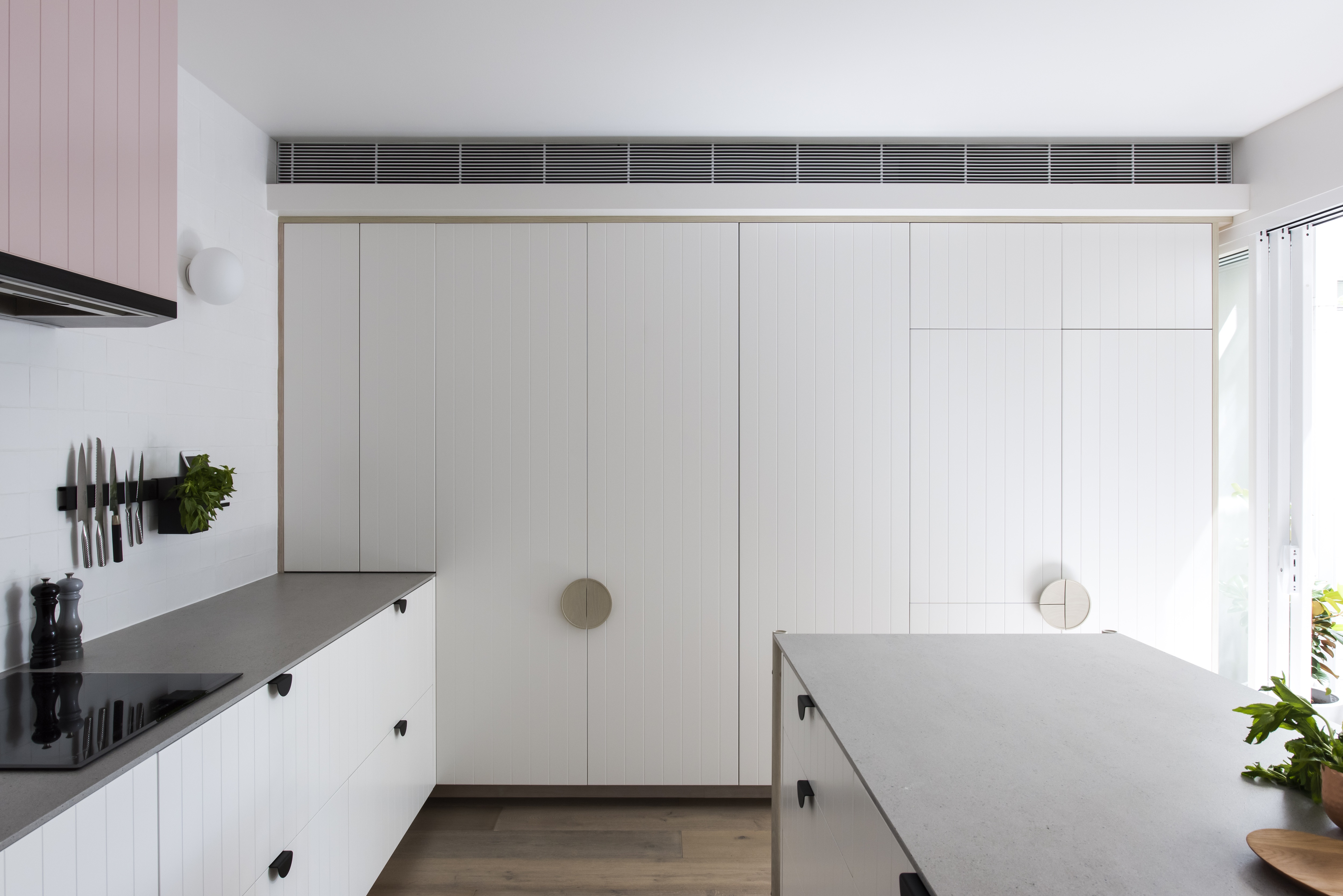
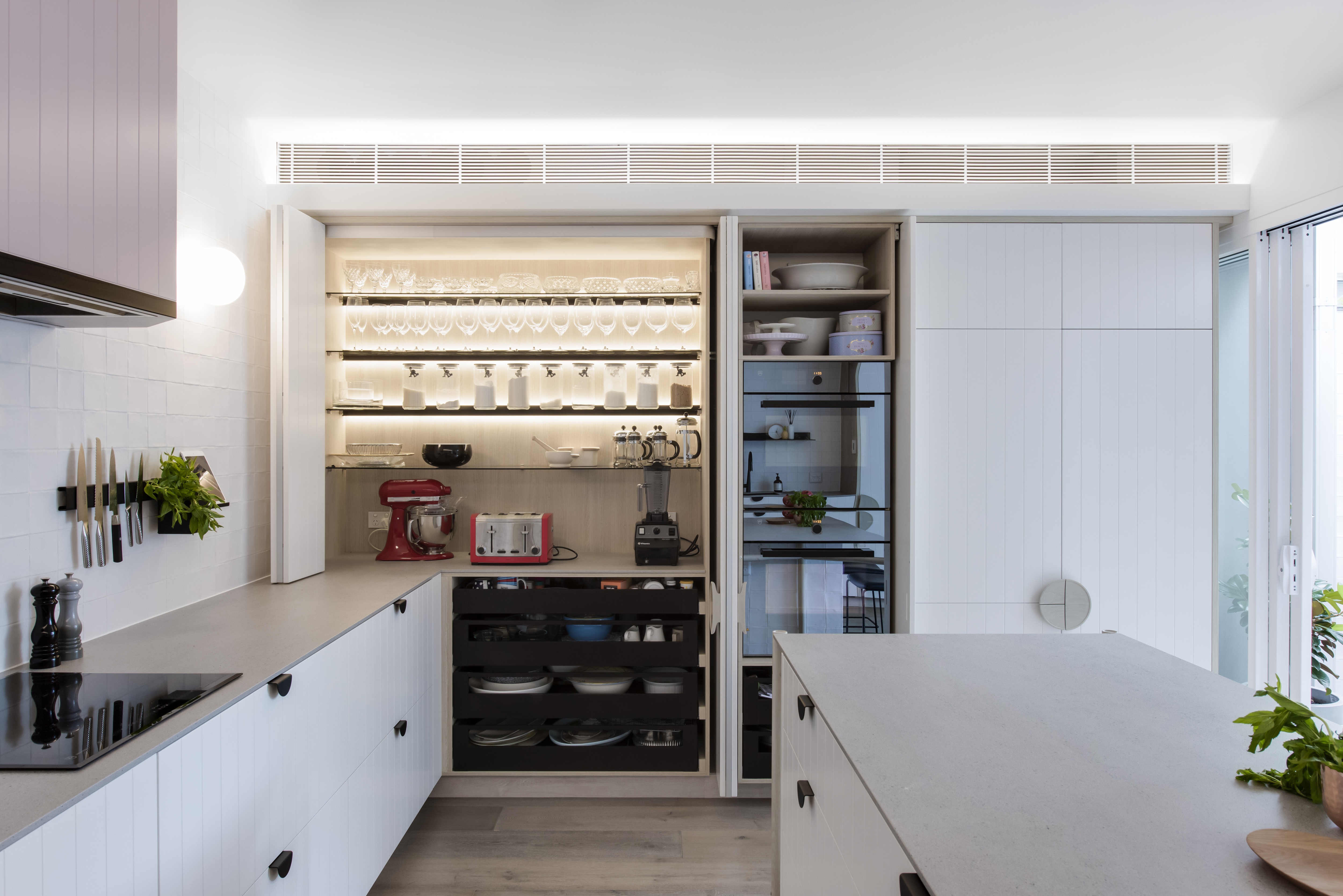
Across these projects, concealment becomes a way of giving rooms more than one identity. A wall of joinery opens to reveal a kitchen. A quiet panel conceals a coffee station. A bar disappears behind doors. A television can be part of the room without becoming the room.
The effect is less about hiding and more about control.
Open-plan living gave us connection, but it also made everything visible. Appliances, screens, paperwork, charging cables and the everyday evidence of family life now sit in spaces once designed to feel calm. Rather than closing those spaces off again, the more elegant response is to let them transform.
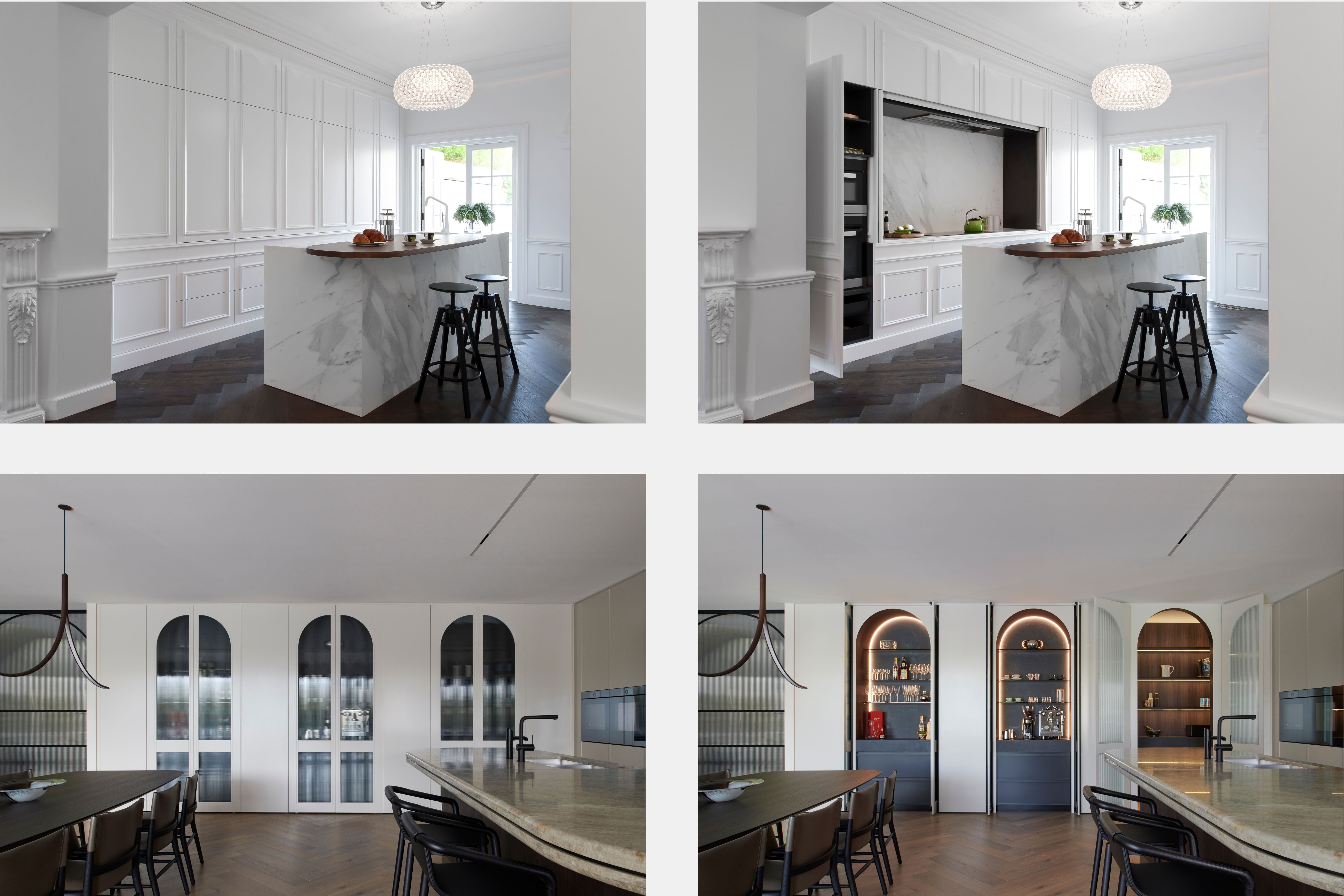
This is where the choreography matters.
A concealed zone can be opened for a morning routine, a video call or an evening drink, then closed again so the room returns to itself. The move from active to quiet becomes part of the architecture.
For families living more layered lives, this flexibility is increasingly valuable. A joinery wall might support work today and another use in ten years. A guest room can function as an office without permanently looking like one. A kitchen can work hard without displaying every working part.
The most successful examples are considered just as carefully in their closed state as their open one. The exterior is calm, resolved, almost monolithic. Then the doors slide back and the interior becomes warmer, richer and more animated.
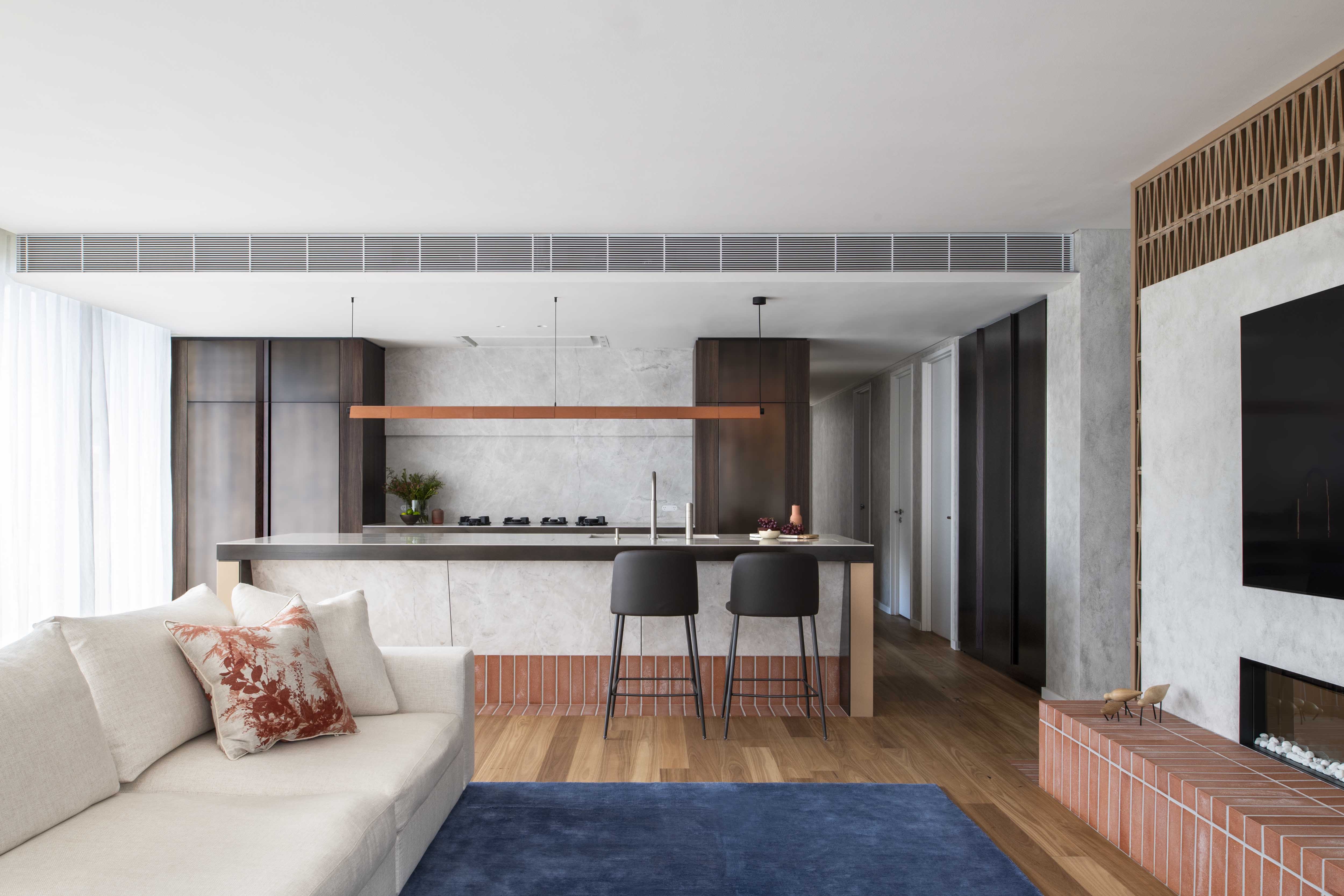
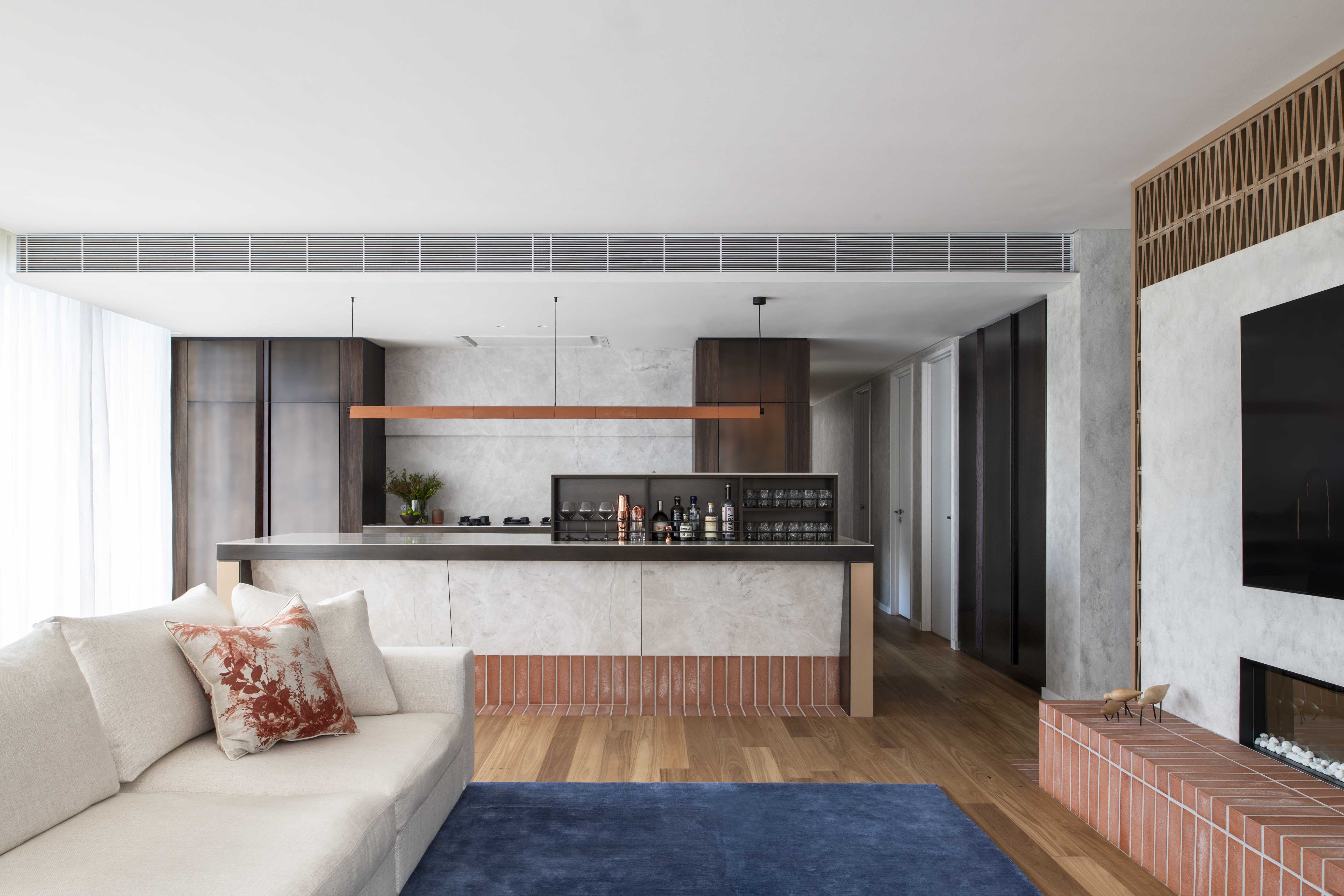
That contrast creates a sense of theatre, but it is also deeply practical.
It asks a simple question: does everything we use every day need to be permanently on show?
The answer, increasingly, is no.
As homes become more social, more digital and more multigenerational, the ability to open and close parts of daily life has never been more relevant. The luxury is not in having more rooms. It is in having rooms that can become more.
Now you see it. Now you don’t.
Design Life Better
Thinking about renovating your property, now is a great time to start the conversation. Click below to learn more!
Stalk us


