
Is the Kitchen Really the Heart of the Home?
October 9, 2026
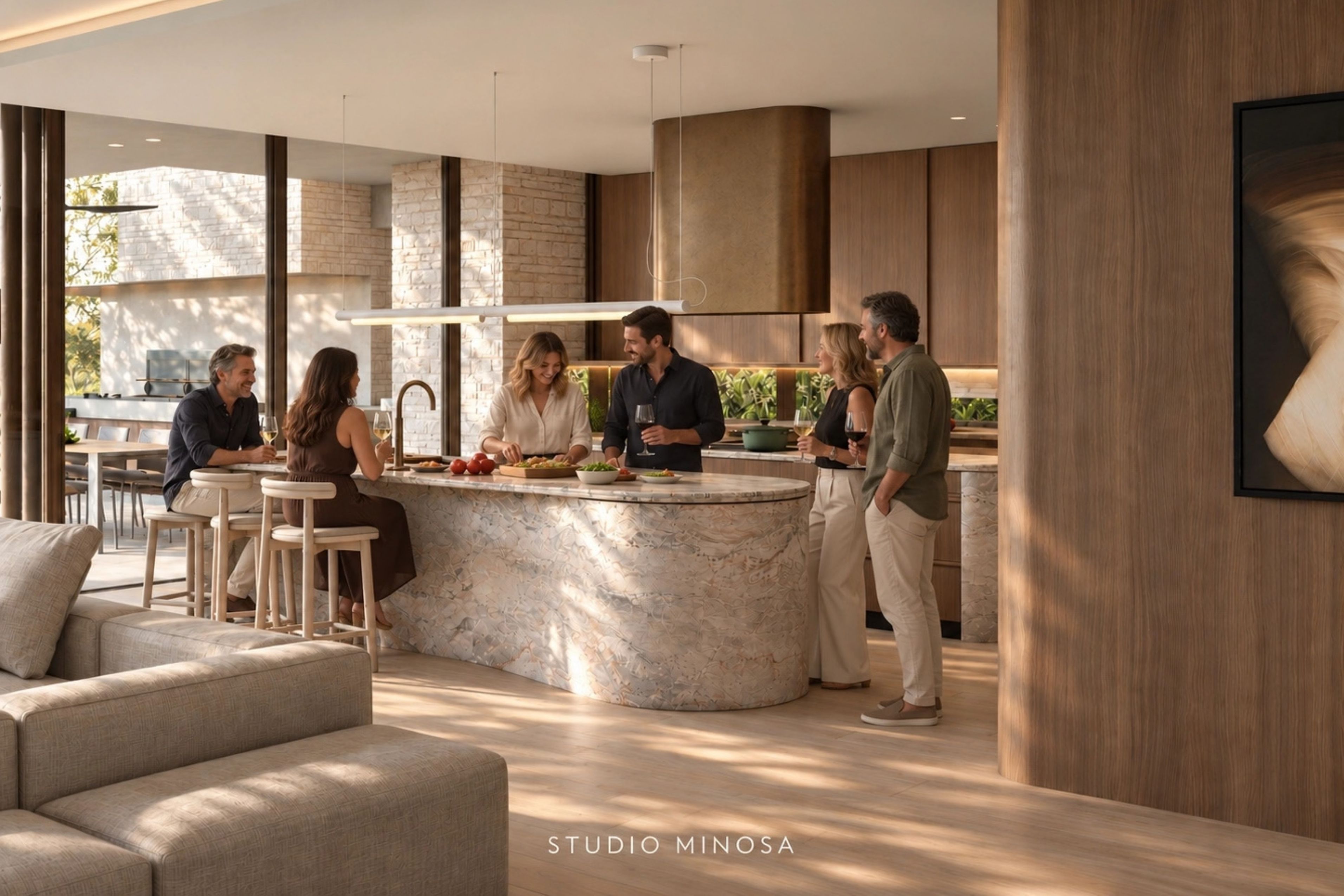
There is a moment at almost every gathering when the house quietly rearranges itself. The dining table may be set, the living room may be beautiful, music is playing and perhaps the doors are open to the garden. And yet, somehow, everyone ends up in the kitchen.
Someone leans against the island. Someone else opens the wine. A friend offers to help but does very little helping. The person cooking remains part of the conversation while children appear, disappear and inevitably return when the food does. Nobody has decided this is where the evening should happen. It simply does.
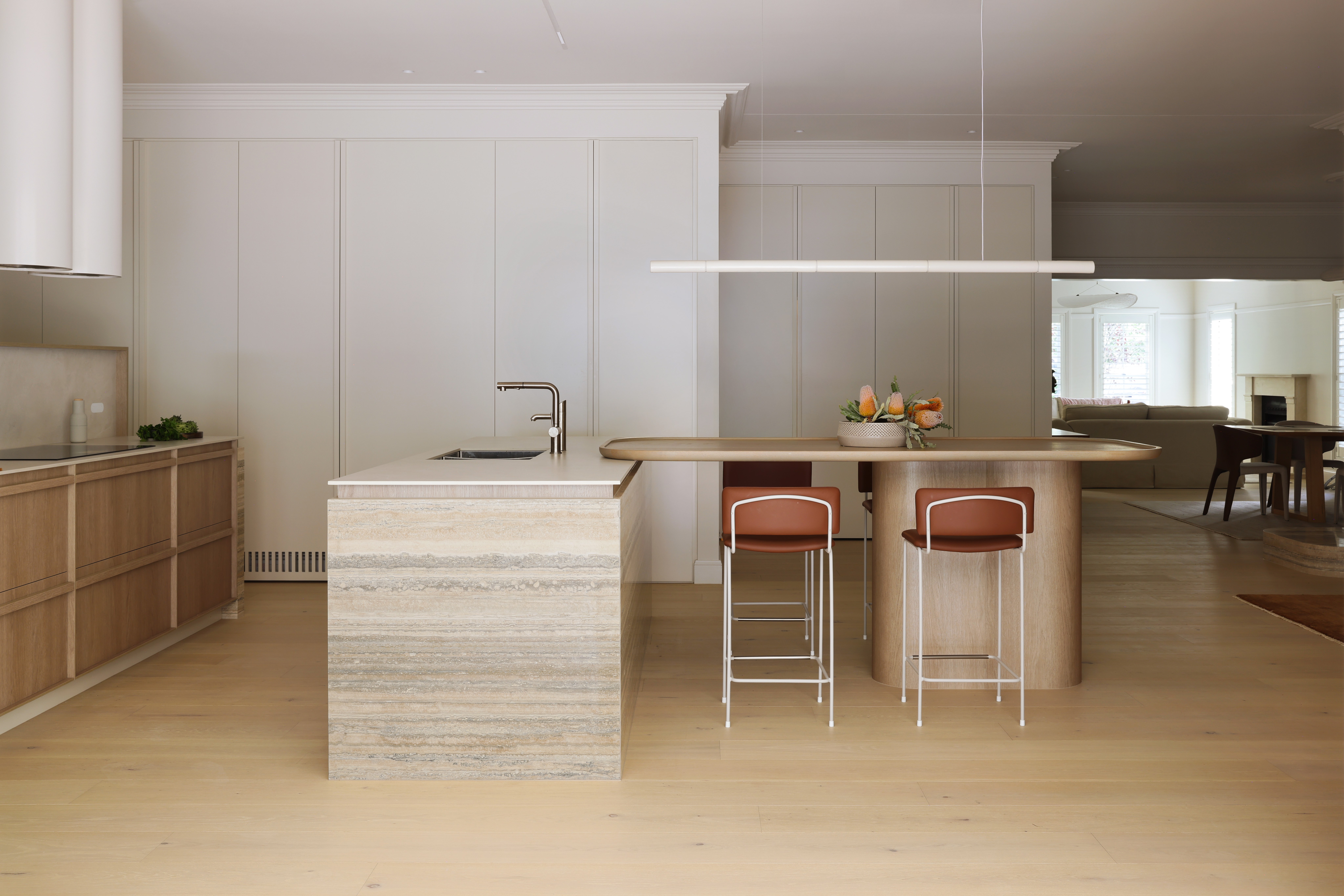
We find that fascinating, because for decades we've described the kitchen as the heart of the home. It's a lovely phrase and perhaps still true, but we're beginning to wonder whether it fully describes what this room has become. The contemporary kitchen feels less like a single heart and more like a social hub — the place where the different rhythms of a home continually intersect.

In many ways, we're simply returning to something very old. Long before kitchens looked anything like they do today, people gathered around food and fire. Preparing a meal was never purely functional; it created a reason to stop, share, talk and spend time together. Across cultures and generations, food has always drawn people towards one another.
The modern house briefly disrupted that relationship. Kitchens became workplaces, often hidden behind the more formal rooms of the home. Food appeared at the dining table while much of the preparation happened somewhere else. Then gradually the walls came down, the kitchen moved forward and the island arrived. Cooking became visible again and, perhaps more importantly, the person cooking became part of the room again.
Today, that room absorbs an extraordinary amount of daily life. Breakfast happens while lunches are being packed. A laptop appears on the island. Homework happens at one end while dinner begins at the other. Friends arrive and, despite the perfectly good living room nearby, instinctively gravitate towards the kitchen. Wine is opened, stories are told and dinner eventually finishes, but somehow nobody leaves.

Which makes one of the biggest trends in contemporary kitchen design slightly curious.
Just as we've brought the kitchen into the centre of family life, we've become increasingly determined to put another kitchen behind it.
The butler's pantry and scullery have become almost standard inclusions in high-end homes. We understand the appeal. Open-plan living exposed the reality of cooking — dirty plates, small appliances, food preparation and the inevitable mess of actually using a kitchen — so we created somewhere for all of that to disappear.
There are homes where this works beautifully, and we design separate sculleries and butler's pantries when the way a family cooks and entertains genuinely requires them. But we don't believe they should be automatic.
There is something contradictory about spending decades bringing the kitchen into the centre of family life, only to create another room where the person preparing the food can disappear again.
Perhaps the better question is not where can we hide the mess? but can we hide the mess without hiding the people?

That question has led us towards what we call the open scullery. Rather than automatically adding another room, the working functions can become a layer within the kitchen itself. Pocket doors reveal coffee stations, appliances, preparation areas, bars and additional storage when they're needed, then allow them to disappear when they're not.
It sounds like a small architectural shift, but socially it's quite significant. The person making coffee, preparing dinner or cleaning up remains connected to the conversation. The kitchen can work hard without looking permanently busy, and change throughout the day without asking people to leave it.
This is where we think the next evolution of kitchen design becomes interesting. It isn't necessarily about making kitchens larger or adding more rooms. It's about making them more adaptable.

A kitchen at seven in the morning has a very different job from the same kitchen at seven in the evening. One moment it is breakfast and school lunches; later it might be homework, dinner or drinks with friends. The architecture should be able to move between those moments with as little friction as possible.
And that changes where we begin as designers.
Of course we care deeply about the stone, joinery, appliances, lighting and all the details that make a kitchen beautiful. But those things aren't really the brief.
The people are.
How they gather. How they cook. When they want to be together and when they don't. What happens on an ordinary Tuesday night and what changes when twenty people arrive for Christmas.
Sometimes understanding those behaviours will lead us to a completely separate scullery. Sometimes to an open one. Sometimes to a kitchen with nowhere to hide anything at all.
There isn't one correct answer, because there isn't one correct way to live.
Perhaps we've also been slightly wrong about the phrase heart of the home. Maybe the kitchen was never the heart because of the room itself. It was the heart because of what happened there — the food, conversations, rituals, noise, ordinary mornings, celebrations and the people who stay leaning against the island long after there is any practical reason to remain.
That's the part we're really designing.
Not simply somewhere to cook, but the conditions for people to connect.
The kitchen can still be the heart of the home. But in the way we live today, we think it has become something more.
The social hub.
Design Life Better
Do you have an exciting new project? Click below to learn more!
Stalk us


